
Achieving Zero-Rework in Structural Welding Projects

Structural welding projects demand precision, skill, and careful planning. Rework in welding not only wastes time and materials but also delays project completion and increases costs. Achieving zero-rework is a challenging but attainable goal that can significantly improve project efficiency and quality. This post explores practical strategies and best practices to help welding teams minimize errors and deliver flawless structural welds on the first attempt.

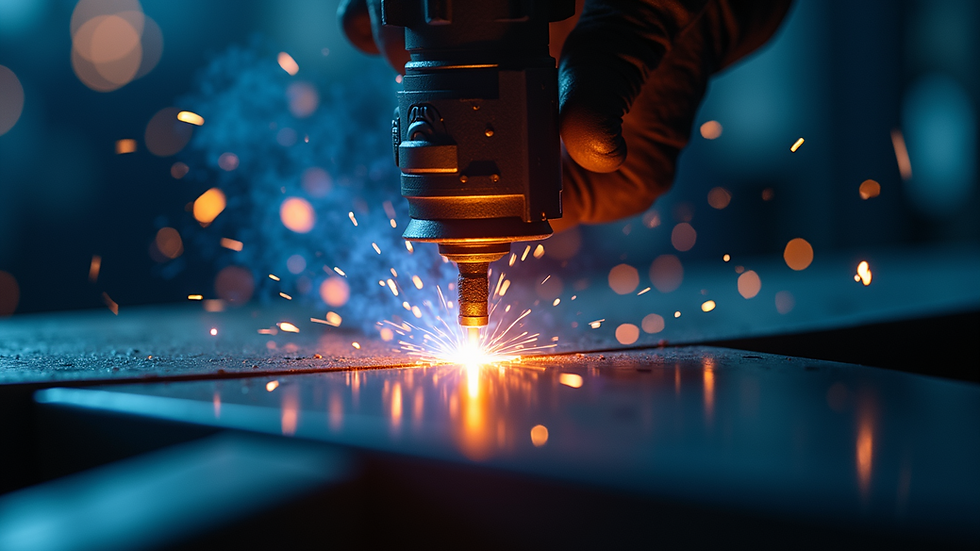
Close-up view of a welder performing precise structural welding on steel beams
Understanding the Causes of Rework in Structural Welding
Before eliminating rework, it is essential to understand why it happens. Common causes include:
Poor weld preparation: Inadequate cleaning, incorrect fit-up, or improper joint design can lead to weak welds.
Incorrect welding parameters: Using wrong voltage, current, or travel speed affects weld quality.
Lack of skilled welders: Inexperienced operators may produce inconsistent welds.
Material defects: Flaws in base metals or filler materials can cause weld failure.
Inadequate inspection: Missing defects during quality checks allows faulty welds to pass.
Environmental factors: Wind, moisture, or temperature extremes can affect weld integrity.
Identifying these root causes helps teams focus on targeted improvements.
Planning and Preparation to Prevent Rework
Effective planning lays the foundation for zero-rework. Key steps include:
Detailed project review
Study design drawings and specifications thoroughly to understand welding requirements.
Material verification
Confirm that all materials meet project standards and are free from defects.
Joint design optimization
Ensure joints are designed for accessibility and proper fit-up to reduce welding difficulty.
Pre-welding cleaning
Remove rust, oil, paint, and moisture from surfaces before welding.
Mock-ups and trial welds
Conduct sample welds to verify parameters and techniques before production.
Clear welding procedure specifications (WPS)
Develop and distribute detailed WPS documents covering parameters, techniques, and inspection criteria.
Training and Skill Development for Welders
Welding quality depends heavily on the operator’s skill. Investing in training reduces errors:
Certification programs
Ensure welders hold relevant certifications for the specific welding processes and materials.
Hands-on workshops
Provide practical training on new techniques, equipment, and safety practices.
Mentorship and supervision
Pair less experienced welders with veterans for guidance and quality assurance.
Regular performance reviews
Monitor welders’ work and provide feedback to encourage continuous improvement.
Using the Right Equipment and Technology
Modern welding equipment and technology can improve accuracy and reduce defects:
Automated welding systems
Robots and semi-automated machines deliver consistent welds with minimal human error.
Advanced welding machines
Use machines with precise controls for voltage, current, and wire feed speed.
Welding parameter monitoring
Employ sensors and software to track welding conditions in real time.
Non-destructive testing (NDT) tools
Utilize ultrasonic, radiographic, or magnetic particle inspection to detect flaws early.
Quality Control and Inspection Practices
Robust quality control prevents defective welds from progressing:
Pre-weld inspection
Check joint fit-up, cleanliness, and materials before welding.
In-process monitoring
Observe welding parameters and techniques during operation.
Post-weld inspection
Conduct visual and NDT inspections to identify cracks, porosity, or incomplete fusion.
Documentation and traceability
Maintain detailed records of welders, parameters, and inspection results for accountability.
Immediate corrective action
Address defects as soon as they are found to avoid costly rework later.
Environmental and Safety Considerations
Environmental conditions affect weld quality and safety:
Control ambient conditions
Use windbreaks, heaters, or shelters to maintain stable welding environments.
Proper ventilation
Ensure fumes and gases are safely removed to protect welders and prevent contamination.
Personal protective equipment (PPE)
Equip welders with helmets, gloves, and protective clothing to maintain focus and safety.
Regular equipment maintenance
Keep welding machines and tools in good condition to avoid malfunctions.
Case Study: Zero-Rework Achieved in a Bridge Construction Project
A recent bridge construction project in the Midwest achieved zero-rework on over 500 structural welds by applying these principles:
The team conducted thorough material inspections and joint preparations before welding.
Welders underwent a week-long refresher training focused on the specific welding codes required.
Automated welding machines were used for repetitive welds, ensuring consistency.
Real-time monitoring software alerted supervisors to any deviations in welding parameters.
A dedicated quality control team performed inspections at every stage, catching potential issues early.
The result was a flawless welding record, saving the project an estimated 15% in time and costs.
Continuous Improvement for Long-Term Success
Zero-rework is not a one-time achievement but a continuous process:
Collect data on welding performance
Analyze trends to identify recurring issues.
Solicit feedback from welders and inspectors
Use frontline insights to improve procedures.
Update training and procedures regularly
Adapt to new materials, codes, and technologies.
Promote a culture of quality
Encourage every team member to take ownership of weld quality.
Achieving zero-rework in structural welding projects requires attention to detail, skilled personnel, proper equipment, and strong quality control. By focusing on preparation, training, and continuous improvement, welding teams can deliver high-quality results that save time and reduce costs. Start implementing these strategies today to build stronger, more reliable structures with confidence.

Comments